Reconnecting with pleasure and joy after trauma
Perhaps one of the unexpected challenges of life after trauma, is the struggle to connect and linger with enjoyable or pleasurable experiences. Sometimes a nervous system stuck in a trauma response (think fight, flight, or freeze), doesn’t have much tolerance for enjoyment. This can be the result of shut-down, hypervigilance, fear, and anxiety.
Working with trauma in the body
For someone who has experienced trauma, pleasure and enjoyment can be a source of confusion or it may be scary to let your guard down long enough to notice joy. I have also noticed this show up with clients who have a hard time letting themselves experience my support in therapy, because of how painful it is to feel the lack of support they have in the rest of their life. The feeling of enjoyment, pleasure, support, and relief can, for a traumatized nervous system, seem to highlight the pain of suffering, loneliness, anxiety, or fear. It can also feel like a shift out of a more hypervigilant/guarded place, which may feel too vulnerable and scary at first.
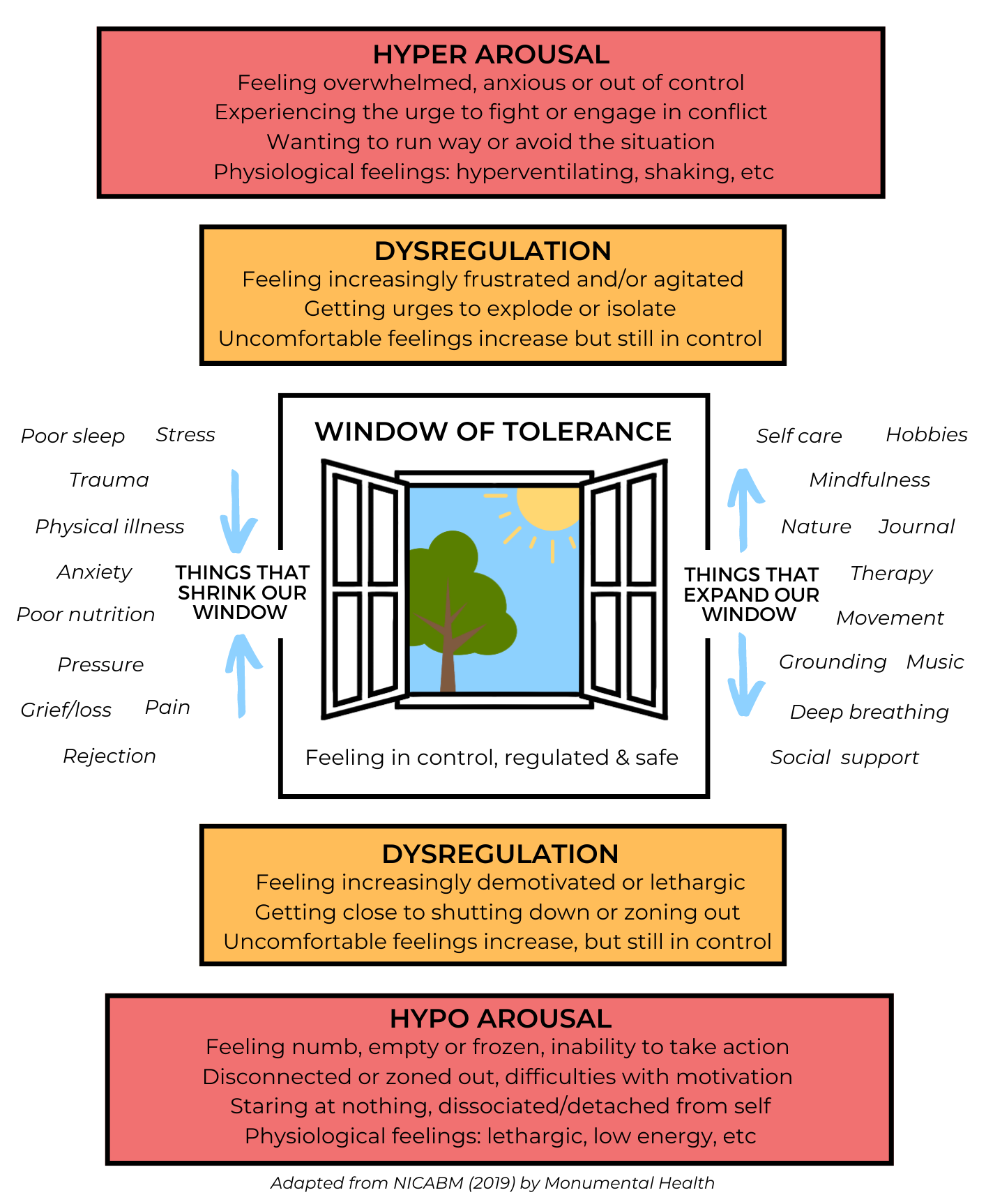
Getting to know your Window of Tolerance
You may have heard about the window of tolerance, developed by Dr Dan Siegel. It is essentially a way for understanding what your mind-body system’s scope of tolerance is for emotions and experiences. How easily are you triggered? How hard is it to stay grounded? If you feel on-edge, easily thrown back into the past, less grounded in the present, you may have a narrow window of tolerance. Stressors and triggers, even small stuff, might cause you to feel angry, anxious, or shut-down and dissociated. This can lead to states of hyper- (anxious, angry, tearful, etc.) and hypo-arousal (shut-down, dissociated, etc.).
The hope with trauma processing is that with the support of a therapist, you’re able to more effectively cope and expand your window of tolerance. That’s the goal of this work!
It’s important to note, these states of hyper- and hypo- arounsal, they are not states you’re choosing consciously. These are responses from your nervous system that happen subconsciously and are attempts to manage something that is too much for your system.
Take a second to check-in with yourself. What’s happening inside, what are you noticing? Are there experiences that come to mind that let you know about your window of tolerance? See if you can observe what you notice without passing judgment on it.
How to expand capacity for joy: easing in
Of course we want to reconnect with experiences of pleasure and joy after trauma. And we can! But we first really need to honor and work within your very particular window of tolerance. For most of the folks I work with who are recovering from trauma, that means we ease in. We get to know the edges, the bounds of your window, and what bumps you out of it, into either hyper- or hypo- aroused states of being. If we find ourselves in one of those spots above or below your window, we will gently guide your system back to the window of tolerance, finding again what feels ok, neutral, grounded. In bringing back pleasure and joy, we want to notice those things starting with a relatively small or neutral thing, and track what happens in your mind-body system as you connect with that thing.

Maybe you have a cute dog or cat. Can you notice how cute your dog or cat is? Look at them, connect with that cuteness for a second. And notice what happens inside as you do that. Maybe you feel a smile on your face. Maybe you feel a lightness in your chest. Maybe you notice nothing. No right or wrong answer, we’re just exploring how your system responds to this kind of enjoyment. It’s that kind of thing, on repeat. Easing in to joy and pleasure, turning on those receptors in your brain again, but trying to keep that window of tolerance in mind as we do so.
Take a second to check-in with yourself again. What are you noticing?
Honoring the pace of your nervous system
With any trauma work, we are honoring the pace of your nervous system. If you need to, use your breath to guide you back to your window. Find your feet on the floor. Maybe push them into the floor or flex your toes. Connect back to the present moment in whatever way you can. Find 5 yellow things. For clients in my office, I might ask them to look around my space and notice if there’s anything their eye is drawn to. Can they also notice my presence in the room?
Reconnecting with pleasure and joy is so much a part of trauma recovery work. Trauma therapy is not just about talking about hard and painful things that have happened to you. It’s also about helping your system connect to ease, comfort, enjoyment. And it is a very worthwhile work. This work can be hard to do on your own. If you’ve experienced trauma and you’d like to explore what trauma therapy is like in my practice, I hope you’ll reach out.